


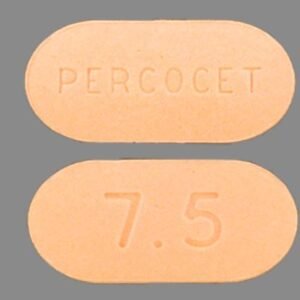


Percocet 7.5/500mg Tablets: Critical Safety Alert
Percocet is a combination prescription medication containing oxycodone (an opioid pain reliever) and acetaminophen (a non-opioid pain reliever). The 7.5/500mg strength contains a higher dose of acetaminophen, which significantly increases the risk of severe liver damage.
1. 🧪 Drug Profile
-
Oxycodone Hydrochloride: 7.5mg — A semi-synthetic opioid agonist.
-
Acetaminophen: 500mg — Higher than standard dose (typical Percocet contains 325mg).
-
Purpose: Management of moderate to severe pain (short-term use).
2. ⚠️ Extreme Risks & Warnings
-
ACETAMINOPHEN TOXICITY:
-
Maximum daily acetaminophen limit: 4,000mg (FDA recommendation).
-
Just 8 tablets = 4,000mg — exceeding this can cause acute liver failure, transplant, or death.
-
-
OPIOID RISKS:
-
Respiratory depression (slowed or stopped breathing).
-
Addiction, abuse, and misuse.
-
-
SYNERGISTIC DANGER: Combination increases overall risk of fatal overdose.
3. 🚨 Critical Safety Information
-
STRICT DOSAGE LIMITS:
-
Do NOT exceed 8 tablets per 24 hours.
-
Closely track all acetaminophen sources (e.g., cold medicines).
-
-
AVOID ALCOHOL: Even small amounts increase liver toxicity risk.
-
DO NOT COMBINE WITH:
-
Benzodiazepines (Xanax, Valium).
-
Other opioids or CNS depressants.
-
-
SWALLOW WHOLE: Never crush, chew, or dissolve — can cause rapid release and fatal overdose.
4. ✅ Safe Use Guidelines (For Prescribed Patients Only)
-
Take exactly as prescribed — never increase dose/frequency.
-
Use shortest duration possible — avoid long-term use.
-
Store securely — locked container to prevent misuse/theft.
-
Recognize overdose signs:
-
Slow/shallow breathing.
-
Confusion or unresponsiveness.
-
Nausea/vomiting (liver toxicity).
-
Yellow skin/eyes (jaundice).
-
How to take Percocet?
Percocet is a dangerous and highly addictive medication that can deteriorate your health even more or make you a drug addict if taken inappropriately. Take your medicine as prescribed by your doctor and follow all the necessary directions and instructions as given on the medicine or prescription label. We also advise you to tell your doctor if you are not observing any improvement in your health condition.
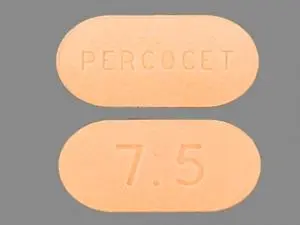
Percocet dosage
Percocet is an effective medication for treating moderate to severe pain. However, it is a dangerous medication; therefore, it is advisable to consult your doctor for the correct and suitable Percocet dosage. Your doctor will examine you thoroughly before prescribing you suitable Percocet dosages. Doctors generally consider the following factors before prescribing you appropriate medicine dosages:
- Age of the patient
- Weight of the patient
- The medical condition of the patient
The following are the usual Percocet dosage that your doctor can prescribe you:
Dosage for treating pain
In the form of oral tablets with the strength of 2.5 mg/325 mg
- For adults
One to two Percocet tablets after every six hours or as and when required
- For children
Using Percocet for treating children is not recommended. In the form of oral tablets with the strength of 5 mg/325 mg
- For adults
One Percocet tablet orally, after every six hours or as and when required.
- For children
Using Percocet for treating children is not recommended. In the form of oral tablets with the strength of 7.5 mg/325 mg
- For adults
One Percocet tablet orally, after every six hours or as and when required.
- For children
Using Percocet for treating children is not recommended. In the form of oral tablets with the strength of 10 mg/325 mg
- For adults
One Percocet tablet orally, after every six hours or as and when required.
- For children
Using Percocet for treating children is not recommended.

Overdose
Being an opioid pain medication, Percocet is an effective medication used for reducing pain signals. However, it may cause an overdose if taken in excess. Observe your health; you may experience the following life-threatening symptoms in the case of Percocet overdose:
- Nausea or vomiting
- Unusual sweating
- Drowsiness or dizziness
- Pinpoint pupils
- Slow or shallow breathing
- Breathlessness
To overcome these fatal overdose symptoms, you should consult your doctor ASAP if an overdose happens. You can also seek emergency medical help by calling the poison helpline at 1-800-222-1222.
What to avoid while using Percocet?
Percocet can impair your thought process and cause dizziness or drowsiness. Therefore, it is advisable to avoid driving and performing any other activities that can cause severe injuries or accidents. Avoid taking herbal products, vitamins, and other nutritional supplements simultaneously with Percocet. They can dangerously interact with the medicine. Please consult your doctor before taking any other medicine containing acetaminophen. Taking these medicines all together may result in an overdose.
Percocet side effects
Percocet is one of the effective medicine for treating moderate to severe pain; however, it can cause the following side effects:
- Dizziness or drowsiness
- Tiredness
- Headaches
- Constipation
- Nausea or vomiting
- Pain in the stomach
- Blurred vision
- Itchiness
- Redness in the eyes
- Flushing
- Extreme mood swings
- Dry mouth
It is obvious to experience these mild side effects after using Percocet, and you should not worry too much about them unless they are bothering you too much. However, it is necessary to consult your doctor if these mild side effects are unbearable or making your life too complicated. Please stop taking Percocet and seek emergency medical assistance ASAP if you experience the following health issues while taking medicine:
- Noisy breathing
- Sighing
- Slow or shallow breathing
- Sleep apnea (breathing that stops while sleeping)
- Slow heart rate
- Weak pulses
- Cold and clammy skin
- Lightheadedness
- Weakness or tiredness
- Fever
- Unusual bruising or bleeding
- Confusion
- Mood swings
- Behavioral disorder
- Seizures or convulsions
- Difficulty in urination
- Nausea or vomiting
- Loss of appetite
- Dizziness
- Symptoms of the damaged liver such as pain in the upper stomach, nausea, tiredness, loss of appetite, dark-colored urine, clay-colored stools, jaundice
- High serotonin level in the body resulting in diarrhea, vomiting, agitation, hallucination, fever, sweating, nausea, or vomiting, sweating, shivering, fast heart rate, stiff muscles, twitching in the muscles
- Infertility (both in men and women)
- Any other severe allergic reaction to the medicine
What drugs can interact with Percocet?
Percocet can dangerously interact with the following medicines and can adversely affect your health and cause death as well:
- Asthma or COPD medications
- Medicines for motion sickness
- Narcotic medications
- Opioids pain medication
- Cough medicines
- Any sedative medication such as diazepam, Xanax, etc
- Sleeping pills
- Drugs affecting the serotonin level in the body
- Medicines to treat mental illness
- Anti-anxiety medication
- Antidepressant
As their interaction can be fatal, it is advisable to take advice from your doctor before starting the treatment if you take these medicines or any other over-the-counter medicines. In addition to this, you should also inform your doctor if you are taking the following medicines:
- Antibiotic medicines
- Antifungal medications
- Heart or blood pressure medicines
- Seizure medication
- Medicines to treat HIV
- Medicines to treat hepatitis C
- Cold or allergy medicines
| Quantity | 60 pills, 120 pills, 180 pills, 240 pills, 300 pills |
|---|
Be the first to review “Percocet 7.5/500mg Tablets”
Related products

Pain Killers Medications
Norco 5/325mg: Important Safety Information Norco is a prescription-only combination opioid medication used for the management of moderate to moderately severe pain. It is a Schedule II controlled substance in the United States due to its high potential for abuse, addiction, and overdose. 1. 🧪 Active Ingredients & Purpose Hydrocodone Bitartrate (5mg): A semi-synthetic opioid agonist that works in [...]
This product has multiple variants. The options may be chosen on the product page

Pain Killers Medications
Percocet 10/325mg Tablets: Safety Information Percocet is a combination prescription medication containing two active ingredients: oxycodone (an opioid pain reliever) and acetaminophen (a non-opioid pain reliever and fever reducer). It is used for the management of moderate to severe pain when other treatments are inadequate. 1. 🧪 Drug Profile Oxycodone Hydrochloride: 10mg — A semi-synthetic opioid agonist. Acetaminophen: 325mg — A non-opioid analgesic. Purpose: Provides relief through [...]
This product has multiple variants. The options may be chosen on the product page
Pain Killers Medications
OxyContin OC 5mg Tablets: Safety Information OxyContin (oxycodone hydrochloride controlled-release) is a powerful prescription opioid analgesic. The 5mg tablet is an extended-release formulation used for the management of moderate to severe pain requiring around-the-clock treatment. 1. 🧪 Drug Profile Generic Name: Oxycodone hydrochloride Formulation: Extended-release (ER) tablet designed to release medication slowly over 12 hours. Potency: Oxycodone is approximately 1.5 times stronger than morphine. [...]
This product has multiple variants. The options may be chosen on the product page
Pain Killers Medications
Norco 10/325mg Tablets: Effective Pain Management Norco 10/325mg tablets combine hydrocodone bitartrate (10mg) and acetaminophen (325mg) to provide effective relief for moderate to moderately severe pain. This prescription medication offers dual-action pain relief while requiring careful medical supervision. Key Features: Hydrocodone: Opioid analgesic that works in the central nervous system Acetaminophen: Enhances pain relief and [...]
This product has multiple variants. The options may be chosen on the product page

Pain Killers Medications
Percocet 2.5/325mg Tablets: Safety Information Percocet is a combination prescription medication containing two active ingredients: oxycodone (an opioid pain reliever) and acetaminophen (a non-opioid pain reliever and fever reducer). The 2.5/325mg strength is a lower-dose formulation used for the management of mild to moderate pain. 1. 🧪 Drug Profile Oxycodone Hydrochloride: 2.5mg — A semi-synthetic opioid agonist. Acetaminophen: 325mg — A non-opioid analgesic. Purpose: Provides relief through two [...]
This product has multiple variants. The options may be chosen on the product page

Pain Killers Medications
⚠️ OxyContin OP 60mg Tablets: Critical Safety Alert OxyContin (oxycodone hydrochloride controlled-release) 60mg is a very high-dose, extended-release prescription opioid intended only for opioid-tolerant patients with severe, around-the-clock pain. This potency level carries extreme risks of overdose and death. 1. 🧪 Drug Profile & Potency Generic Name: Oxycodone hydrochloride Formulation: Extended-release (ER) tablet with abuse-deterrent properties (designated “OP”). Potency: Oxycodone is approximately 1.5 times stronger than morphine. [...]

Pain Killers Medications
ZOHYDRO ER Capsules: Extended-Release Pain Management Solution Experience lasting relief from severe chronic pain with ZOHYDRO ER (Hydrocodone Bitartrate) Extended-Release Capsules. This prescription medication is designed for patients who require around-the-clock pain management when alternative treatments prove insufficient. Key Features: Extended-release formula provides 24/7 pain control Contains pure hydrocodone without acetaminophen FDA-approved for chronic pain management [...]
This product has multiple variants. The options may be chosen on the product page
Pain Killers Medications
Mylan Fentanyl Patches: Severe Chronic Pain Management Mylan fentanyl transdermal patches are a potent opioid delivery system designed for patients with severe, around-the-clock chronic pain who are already opioid-tolerant. This Schedule II controlled substance requires extreme caution and professional medical supervision. Critical Safety Notice: Fentanyl is 50-100 times more potent than morphine. These patches are: Not [...]
This product has multiple variants. The options may be chosen on the product page
Reviews
There are no reviews yet.